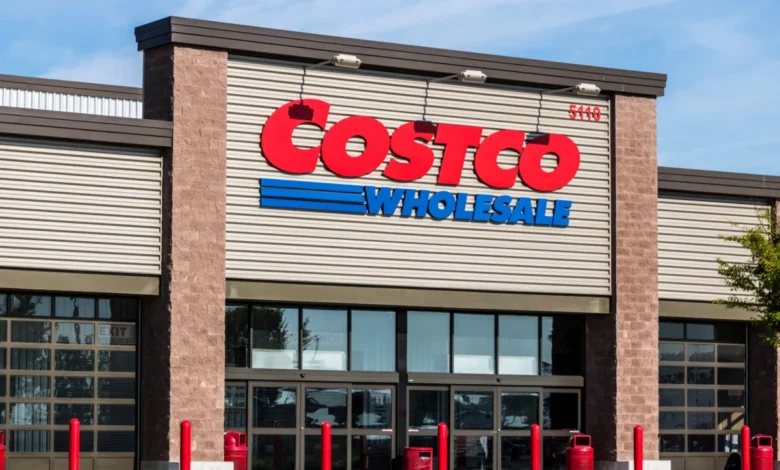
The Evolution of the Costco Delivery Ecosystem
The expansion represents a critical evolution in how Costco manages its "last-mile" delivery strategy. While the company has historically relied on a cautious approach to e-commerce—prioritizing the in-store membership experience over aggressive online fulfillment—the recent shift reflects a broader retail trend toward omnichannel integration.
Historically, Costco’s digital presence was seen as a secondary component of its business model, designed to support the physical warehouse experience rather than replace it. However, the COVID-19 pandemic served as an accelerant, forcing a rapid reassessment of delivery capabilities. The partnership with Instacart was the first major step in this direction, providing members with a reliable platform for same-day grocery delivery. The inclusion of Uber Eats and DoorDash in the company’s delivery portfolio suggests a deliberate move toward "delivery diversification." By working with multiple third-party logistics (3PL) providers, Costco mitigates the risks associated with relying on a single partner while optimizing for speed and regional coverage.
Chronology of Expansion
The roadmap to this nationwide rollout did not happen overnight. The relationship between Costco and Uber Eats began as a series of regional pilot programs, initially testing the appetite of suburban and urban members for bulk delivery.
- Early 2020s: Costco initiates localized testing of third-party delivery to gauge demand for non-perishable and perishable items delivered in under two hours.
- 2024: Following successful trials in major metropolitan areas, Costco begins expanding the Uber Eats footprint to select states, focusing on high-density regions.
- March 2026: During the fiscal Q2 2026 earnings call, Chief Financial Officer Gary Millerchip reports that same-day delivery through third-party partners is outpacing overall digital sales growth, which had risen 22.6% year-over-year.
- Present Day: The nationwide rollout reaches all 47 states where Costco operates, integrating nearly 600 warehouse locations into the Uber Eats interface.
The Integration Mechanics
For the end-user, the integration is designed to be seamless. Members are required to input their Costco membership number directly into the Uber Eats application. This verification step is vital for the company, as it preserves the integrity of the membership-based revenue model that defines Costco’s fiscal health. Once verified, members gain access to the full warehouse inventory, including fresh produce, household staples, and electronics, with the choice of either on-demand delivery or scheduled time slots.
Beyond the logistical convenience, the two companies have implemented a cross-promotional framework intended to increase customer "stickiness." Members of Costco can now access a 50% discount on their first year of an Uber One subscription, with a 20% discount applied in subsequent years. This synergy is designed to drive adoption of Uber’s premium service, which includes perks like zero delivery fees and exclusive promotional discounts, while simultaneously incentivizing Uber users to consider the long-term savings of a Costco membership. Additionally, Costco is now offering discounted Uber and Uber Eats gift cards, and new members can sign up for a Costco subscription via the Uber Eats platform, often with significant introductory discounts.
Performance Data and Economic Impact
The financial performance of these initiatives has been characterized by high efficiency. According to recent investor disclosures from CEO Ron Vachris, the average same-day delivery time currently sits at 45 minutes. More impressively, the service boasts a customer satisfaction rating of 4.8 out of 5, a metric that is critical for a retailer that relies heavily on high-frequency, high-value repeat customers.
The data suggests that the demographic utilizing these services consists of the retailer’s most loyal and highest-spending members. By capturing this segment’s demand for convenience, Costco is essentially insulating itself from the encroachment of other mass merchants who have invested heavily in their own internal delivery fleets. By opting for a 3PL strategy, Costco avoids the massive capital expenditures associated with owning and maintaining a proprietary delivery fleet, allowing them to maintain lower margins and lower prices for their members—the cornerstone of their business philosophy.
Official Statements and Industry Perspectives
The collaboration has been met with enthusiasm from both corporate partners. Andrew Macdonald, President and Chief Operating Officer at Uber, emphasized that the partnership is a testament to the scale that Uber can provide to traditional retailers. "Costco is one of the largest and most trusted retailers in the country for good reason," Macdonald stated, highlighting that the expansion reflects the growing demand for everyday shopping needs to be met with the same speed as restaurant food delivery.
From the Costco perspective, leadership remains focused on the "loyalty engine" that same-day delivery provides. CEO Ron Vachris noted in a recent investor call that while third-party partners handle the logistics, the brand experience remains firmly in Costco’s control. The ability to maintain high satisfaction scores while scaling to nearly 600 locations indicates that the operational hand-off between warehouse staff and delivery drivers has reached a high degree of maturity.
Strategic Implications and Future Outlook
The broader implications of this nationwide expansion are profound for the retail sector. Costco’s multi-partner strategy stands in stark contrast to the "walled garden" approach taken by competitors like Amazon, who prefer to control every aspect of the supply chain. By utilizing Instacart, Uber Eats, and DoorDash, Costco is positioning itself as a platform-agnostic retailer.
Furthermore, the international scope of this strategy cannot be overlooked. Costco has already integrated Uber Eats into its operations in Canada, France, Japan, Spain, Taiwan, and Mexico. The use of Instacart’s "Storefront Pro" technology to power proprietary websites in Europe suggests that Costco is comfortable with a hybrid model: using third-party logistics to fulfill orders while maintaining branded digital storefronts in markets where it is advantageous to do so.
As retail continues to shift toward a model where the physical warehouse acts as a distribution hub rather than just a store, Costco’s ability to maintain its low-price, high-volume model through third-party logistics will be tested. However, if the current growth rates for same-day delivery persist, it is likely that the company will continue to deepen these partnerships, potentially exploring more sophisticated API integrations that allow for real-time inventory management across all 600+ locations.
For now, the nationwide Uber Eats rollout confirms that Costco has successfully transitioned into a modern digital retailer without sacrificing the membership-centric model that has served as its bedrock for decades. The focus will now turn to whether the company can maintain these high satisfaction metrics as the volume of orders increases and the complexity of the "last mile" continues to grow in an increasingly crowded e-commerce landscape. The data from the coming fiscal quarters will be the final arbiter of whether this massive logistical expansion translates into the sustained long-term growth shareholders expect from the retail giant.